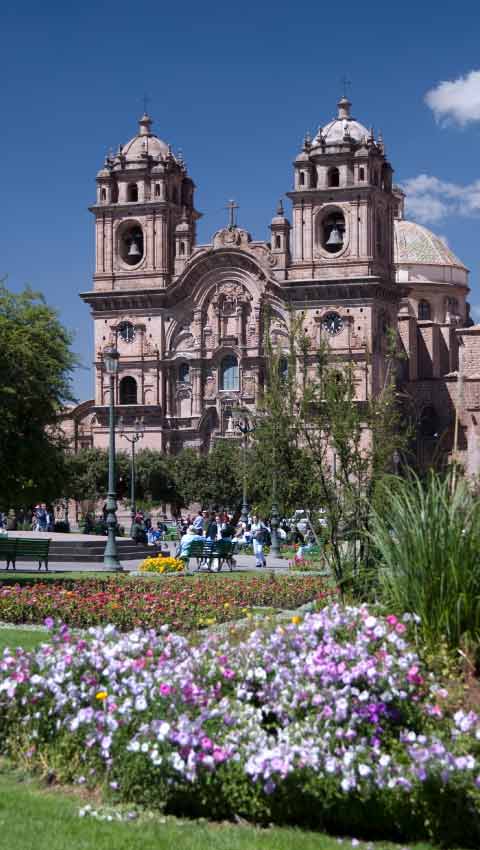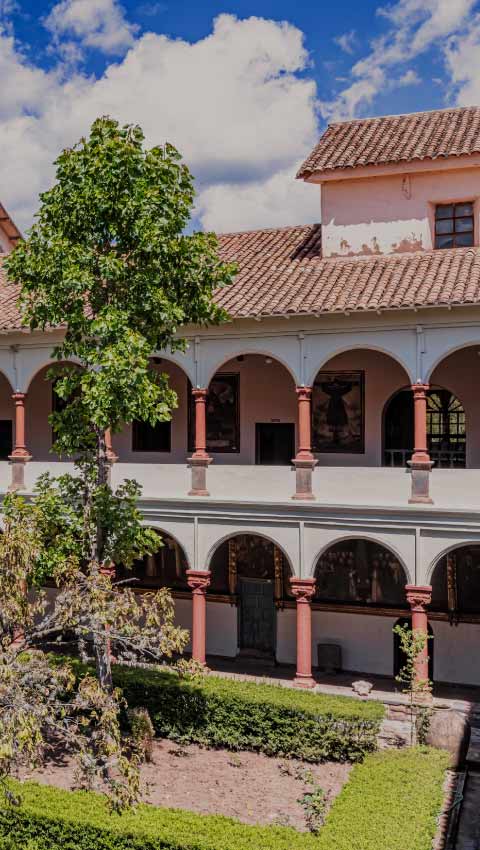

Also known as the Basilica Cathedral of the Virgin of the Assumption, it is an imposing religious building located in the Main Square of the city of Cusco. It is one of the main tourist attractions and represents a valuable example of Peruvian colonial architecture.
Its construction began in 1559 shortly after the Spanish conquest of the region and took place on the site where an Inca palace previously stood. This process lasted for several centuries, with different architectural stages and styles, resulting in a blend of Renaissance, Baroque, and Gothic influences. This amalgamation of styles is precisely one of the highlights of the cathedral, which now exhibits an impressive fusion of artistic traditions in its structure and decoration.
Since 1972, the Cathedral of Cusco has been included in the Monumental Zone of Cusco, receiving official recognition as a Historic Monument of Peru. Furthermore, its location within the historic center of the city of Cusco allowed it to be part of the central area that, in 1983, was declared a Cultural Heritage of Humanity by UNESCO. These distinctions provide well-deserved recognition to the cultural, historical, and architectural significance of this magnificent temple, preserving its legacy for future generations.
Architecture
The Cathedral of Cusco has an impressive front of carved stone. Its interior consists of three majestic naves, housing colonial artistic treasures of great value, such as paintings from the renowned Cusco School and multiple religious sculptures.
Its main altar is made of finely carved stone and possibly holds the title of the most significant colonial goldsmith creation in all of America, as over 1250 kilograms of silver were used. This impressive construction is a true craftsmanship jewel, with elaborate details and refined workmanship, bearing witness to the skill and mastery of artisans from that era. Its splendor and magnificence make it a tangible symbol of the devotion and religious splendor that characterized the colonial period in Cusco.
The Iglesia de la Compañia, located on the Main Square, is a Jesuit colonial temple, built on the palace of Amarucancha of Huayna Cápac in 1571, and one of the most beautiful in Cusco (Photo by Andy Wolf)
Publicado por Visit Peru en Domingo, 24 de noviembre de 2013
One can also appreciate other meticulously carved wooden pieces adorned with gold leaf, as well as magnificent details in stone and precious metals that add a touch of sumptuousness and devotion to this sacred place.
Among the artistic treasures found in the cathedral, notable mentions include the painting of The Last Supper, featuring a feast with typical Peruvian dishes instead of the traditional supper, and the Christ of the Tremors, a carved image of a crucified Christ that, according to legend, protects the city from earthquakes.
How to get there?
Reaching the Cathedral of Cusco is easy due to its location in the heart of the Main Square. It is included in all the tourist tours offered in the city and is very close to the main hotels in the area.
If you have the opportunity to visit Cusco, you cannot miss admiring this majestic cathedral and its rich religious and cultural history.