

Written by:
peru.travel
Tuesday, October 3, 2023
According to the National Geographic magazine, Peru is one of the most megadiverse countries on the planet. This recognition is based on the convergence of exceptional factors found in its vast territory as its wide variety of ecosystems, unique geography, strategic location, abundance of present species, and conservation efforts.
This biodiversity is of great importance national and internationally, as it contributes to the richness of life on Earth and the preservation of endangered species.
Why is Peru a biodiverse country?
Geography: The territory goes from the golden and arid Pacific coast to the imposing and snow-capped peaks of the Andes, passing through the extensive and dense Amazon rainforest, hosting a wide range of ecosystems. These provide a conducive environment for a rich diversity of life. Furthermore, its strategic location in South America makes Peru a convergence point for species from other continents.
Species: Biodiversity is reflected in the vast number of species that inhabit the country: more than 1800 species of birds, over 300 mammals, nearly 500 types of reptiles and amphibians, and thousands of plant species, among others. What enhances the importance of this biodiversity is the existence of endemic species, those that have their only habitat in Peruvian territory and are not found anywhere else on the planet.
Altitude: Altitude variation creates a series of unique environmental conditions and microclimates encouraging the existence of a wide range of species and ecosystems. For example, in coastal regions, temperatures are usually warm and tropical, leading to dry forests and mangroves. As you ascend in altitude, temperatures decrease, creating habitats like cloud forests, grasslands, and paramos. Each of these ecosystems has its own community of plants and animals adapted to the specific altitude conditions.
Conservation efforts: As a country, Peru has made efforts including the creation of national parks and natural reserves, as well as the promotion of scientific research and environmental education.
Peruvian places with high biodiversity
On the coast: In this area, the Paracas National Park and the Ballestas Islands harbor a large number of marine birds and marine life, including sea lions and Humboldt penguins. Additionally, despite its aridity, the dry forests of northern Peru host a surprising diversity of life, including endemic species. The Tumbes National Forests Reserve and the Tumbes Mangrove National Sanctuary are illustrative cases.
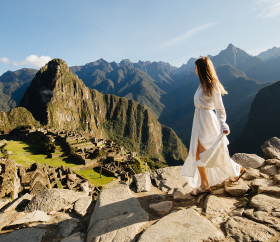
In the Peruvian Andes: The Machupicchu Historic Sanctuary is a place of great historical and natural significance with a rich biodiversity. Over 400 species of orchids have been recorded here. Various species of bromeliads, ferns, and trees are also found.
Arequipa is another biodiverse region where Andean condors are primarily found in mountainous areas. This region encompasses a wide range of habitats, from the warm shores of the Pacific Ocean to the high peaks of the Andes. This results in a great diversity of habitats, such as deserts, valleys, canyons, dry forests, wetlands, and mountains.
In the Amazon: One of the most biodiverse regions on the planet. It is home to an immense variety of flora and fauna, many of which are endemic. Areas like the Manu National Park and the Tambopata National Reserve are examples of places in the Peruvian Amazon standing out for their biodiversity.
In the Madre de Dios region, bamboo forests are essential for biodiversity and have unique species such as the spectacled bear and the jaguar.
In conclusion, Peru's biological diversity is truly impressive and is essential for the global conservation of biodiversity.
You can read more about this news here.
Follow us on social media
Facebook | Instagram | Twitter | TikTok | YouTube