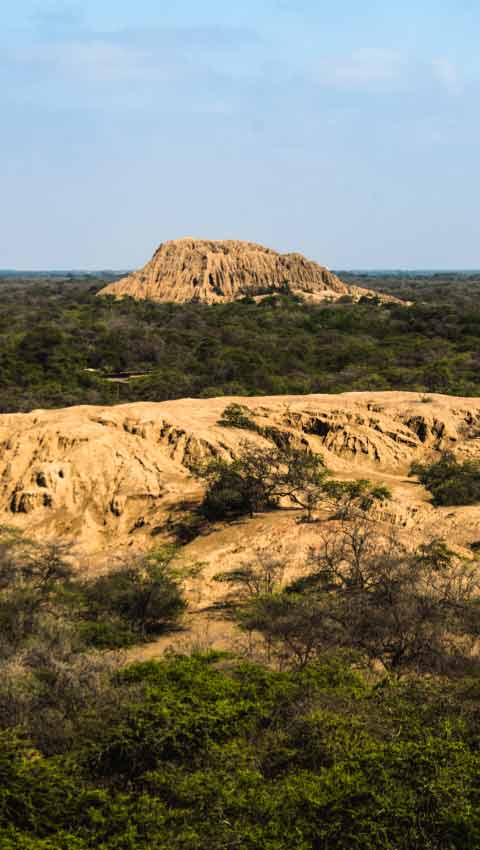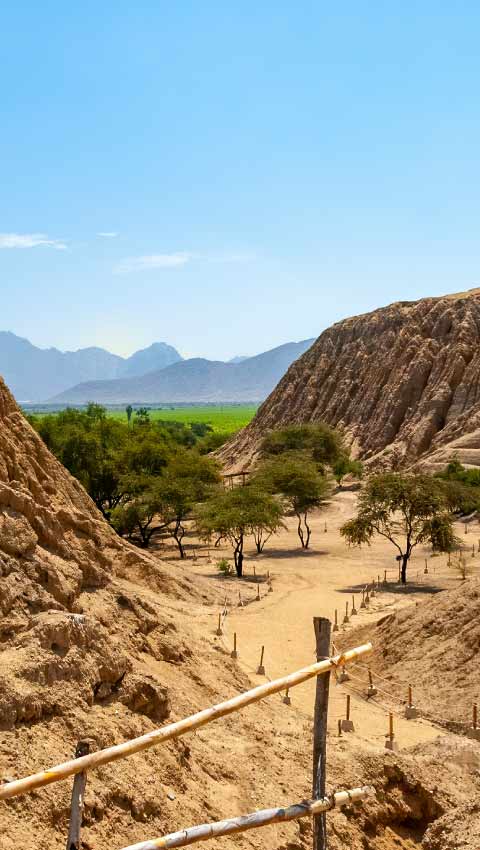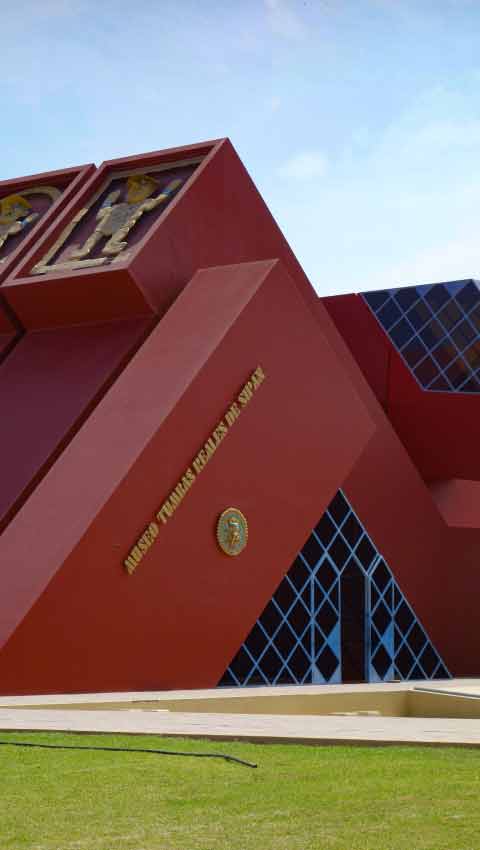

Also known as the Sicán Museum, it was inaugurated in November 2021 and is located in the city of Ferreñafe, belonging to the Lambayeque region. In the ancient Muchik language, the word Sicán means "house or temple of the moon," as it was known the current Historic Sanctuary of Bosque de Pómac.
This museum is dedicated to exhibiting and preserving archaeological objects from scientific excavations belonging to the Sicán culture, an ancient pre-Columbian civilization that thrived in the Lambayeque region in the valleys of Motupe, La Leche, Lambayeque, and Zaña, during the years 750-1375 AD. It displays part of the archaeological and instrumental heritage primarily extracted from the Batangrande area and the objects found in Huaca del Oro.
It is a two-level building, whose design is inspired by the ancient mausoleum temples of Pómac, occupying an area of 2734 square meters. The permanent exhibition is composed of 356 authentic cultural objects that are located in various thematic rooms with the objective of explaining various aspects of Sicán society. Additionally, the museum is surrounded by an environment recreated to reflect the ecosystem of the equatorial dry forest. This landscape includes a diversity of trees and bushes that host various species of birds and other animals.
The Sicán culture is renowned for its metallurgical knowledge and the creation of ornamental and utilitarian objects made of gold and silver. This museum houses a variety of pieces, such as funeral masks, jewelry, ceramics, and textiles, representing the artistic prowess of this ancient civilization.
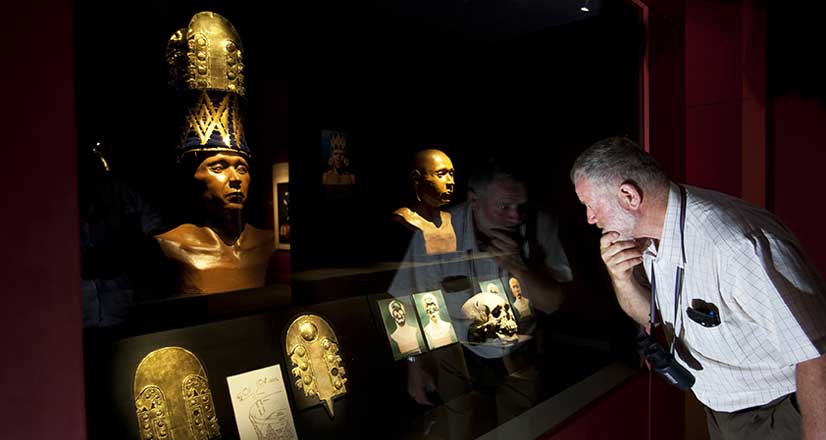
Gold pieces in the National Sicán Museum. Credit: Alex Bryce/ PromPerú.
Lord of Sipán
The main focus of the museum is the reconstruction of an elite tomb discovered in Huaca del Oro in 1987: the tomb of the Lord of Sipán. This figure was a ruler of Sicán, and the discovery of his burial chamber generated significant interest in Peruvian archaeology due to the wealth and cultural value of the objects found inside.
Among the various funerary objects, the main one is an impressive and grandiose gold mask adorned with red tones, in which winged eyes stand out with emerald beads on an amber base. Additionally, there is also an imposing gold headdress considered an authentic masterpiece. This piece, created by the skilled goldsmiths of the Sicán culture, is decorated with silver details.
The Lord of Sipán and his funerary offerings are a tangible demonstration of the artistic and metallurgical skill of the Moche people, as well as their social hierarchy system.
How to get there?
The museum is located at Av. Batán Grande Cuadra 9 s/n Carretera Pítipo. No reservation is required to visit it; admission is on a first-come and in groups according to capacity. Learn about the schedule and ticket prices here.
The Sicán Museum offers visitors an educational and cultural experience that allows them to learn about the history and traditions of the Sicán culture. In addition to the permanent exhibition, the museum also organizes events, workshops, and activities related to archaeology and the pre-Columbian history of the region.